

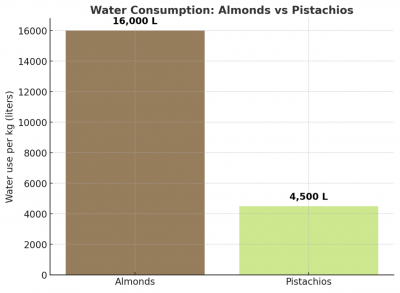
When we talk about sustainable food choices, water use is one of the most important factors to consider. Agriculture accounts for a large share of global freshwater consumption and different crops have very different needs. Among nuts, almonds are often highlighted as particularly water-intensive – but pistachios tell a different story.
 Almonds: high demand on water
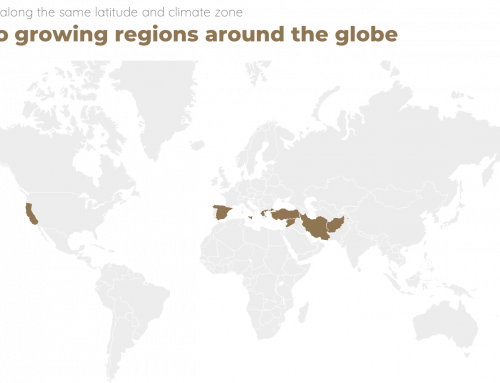
Almond trees are grown in regions where water scarcity is already a challenge, such as California. They require significant watering, especially during hot, dry summers. According to several studies, almonds rank among the most water-demanding nuts, making efficient water management an urgent issue for almond growers.
Pistachios: a lighter footprint
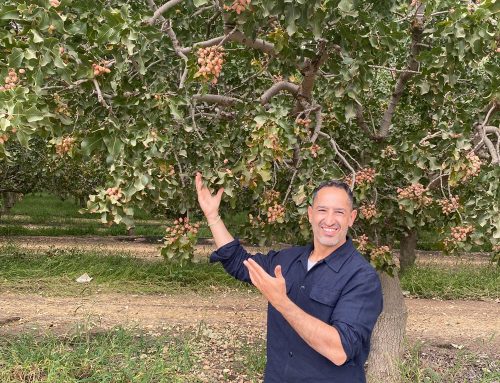
Compared to almonds, pistachios are relatively modest in their water needs. While pistachio trees do require hydration, especially during the nut development stage, they are known for their resilience to dry climates. This makes them a more water-efficient choice. With proper soil and moisture management, pistachios can thrive without placing the same level of stress on local water resources as almonds.
Why it matters
As consumers become more aware of the link between food production and water shortage, the environmental footprint of nuts is increasingly under the spotlight. Choosing pistachios not only supports a nutritious and delicious snack option – it also aligns with a more water-conscious diet.
At Jupiter Pistachios, we work closely with our growers to maximize watering efficiency, recycle water wherever possible and ensure that every pistachio is grown with respect for natural resources.